
In the global fashion industry, care (wash instruction) labels are not optional add-ons—they are a functional, legal, and branding necessity. From protecting garments to ensuring regulatory compliance and enhancing customer trust, care labels play a critical role throughout a product’s lifecycle. For fashion brands aiming to scale internationally, understanding and implementing proper care labeling is essential.

What Are Care Labels and Why Are They Essential?
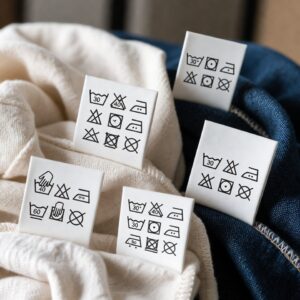
Care labels are permanent textile labels that communicate washing, drying, ironing, and general maintenance instructions to the end consumer. They are designed to ensure garments are handled correctly, preserving fabric integrity, fit, and appearance over time.
From a compliance perspective, many global markets legally require care information to be permanently attached to garments. This is discussed in detail in our related guide, What Are Care Labels and Why Are They Legally Required?, which outlines regulatory expectations across regions.
Failing to include accurate care labels can lead to:
-
Consumer dissatisfaction due to garment damage
-
Increased returns and complaints
-
Legal penalties in regulated markets
-
Reduced brand credibility
Legal Compliance Across Global Markets
Different regions impose specific standards for textile labeling. While regulations vary, most require:
-
Fiber composition
-
Country of origin
-
Care instructions in standardized symbols or text
For example, EU and UK markets rely heavily on ISO care symbols, while the US follows FTC textile labeling rules. A correctly produced care label ensures smooth customs clearance and market entry, especially for brands selling internationally.

Care Labels as a Brand Trust Indicator
Beyond compliance, care labels are a silent brand ambassador. When consumers see clear, professional wash instructions, they associate the garment with quality, reliability, and attention to detail.
This aligns closely with the principles discussed in How Custom Labels Enhance Customer Loyalty and Recognition. A well-designed care label reinforces the idea that the brand cares not only about aesthetics, but also about long-term usability.
Materials Used for Care Labels
Selecting the correct material is critical for durability and wearer comfort. The most common options include:
Satin
-
Soft, smooth surface
-
Ideal for sensitive skin and premium garments
-
Excellent for detailed printing
Taffeta
-
Crisp and highly durable
-
Resistant to repeated washing
-
Commonly used for mass-market apparel
Material choice should be based on garment type, target market, and wash frequency.
The Role of Care Icons and Text Accuracy
Care labels often combine internationally recognized symbols with supporting text. Icons allow quick understanding across language barriers, while text adds clarity for complex instructions.
Accuracy is crucial. Incorrect symbols or misleading text can result in improper garment care, leading to fabric damage and brand liability. Brands remain fully responsible for the correctness of care instructions provided.
Integration with Other Label Types
Care labels work best when integrated into a complete labeling system that includes:
-
Brand labels
-
Size labels
-
“Made in” labels
This holistic approach is part of a broader labeling strategy discussed in Choosing the Right Label Type for Your Clothing Brand. Consistency across all label elements strengthens brand identity and professionalism.
Sustainability Considerations in Care Labeling
Modern consumers increasingly evaluate brands based on environmental responsibility. Using eco-conscious materials and minimizing excess ink or chemical treatments in care labels contributes to a more sustainable supply chain.
This directly supports the principles outlined in Why Sustainable Labeling Matters in Modern Fashion, where responsible material selection is positioned as both an ethical and commercial advantage.
Best Practices for Care Label Design
To ensure production efficiency and compliance, brands should follow these best practices:
-
Use standardized care symbols
-
Ensure legibility after repeated washing
-
Avoid excessive text clutter
-
Select fabrics compatible with garment lifespan
-
Position labels to avoid skin irritation
Care labels should be engineered, not improvised.
Conclusion
Care (wash instruction) labels are a mandatory component of professional garment production. They protect consumers, safeguard brands legally, and reinforce product quality perceptions. Whether launching a new fashion line or scaling globally, investing in properly designed care labels is not just best practice—it is a business requirement.
At LabelGo, care labels are produced with precision, compliance awareness, and material expertise, ensuring every garment meets both market expectations and regulatory standards.
For brands seeking reliability, clarity, and scalable labeling solutions, care labels are where responsibility meets professionalism.