
In the global apparel industry, care labels are not optional add-ons. They are a critical component of garment compliance, user experience, and long-term brand credibility. From legal requirements to customer trust, care labels play a decisive role throughout the product lifecycle.
For fashion brands aiming to scale internationally, understanding the functional and strategic value of care labels is essential.
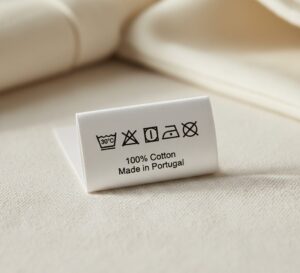
What Are Care Labels and Why Do They Matter?
Care labels—also referred to as wash instruction labels—provide consumers with essential information on how to wash, dry, iron, and maintain garments safely. These labels protect both the end user and the brand by reducing garment damage, complaints, and returns.
From a regulatory perspective, care labels are often mandatory. For a detailed legal overview, see
👉 What Are Care Labels and Why Are They Legally Required?
From a branding perspective, they represent professionalism and accountability—key factors in building long-term trust.
Compliance, Liability, and Global Market Requirements
Different regions enforce different labeling regulations. Incorrect or missing care information can result in:
-
Customs delays
-
Retail rejections
-
Legal penalties
This is particularly relevant for brands operating across multiple markets. Standardisation guidance can be found in
👉 A Guide to Standard Size Labels Across Global Markets
Care labels work alongside origin disclosures, making them closely connected to
👉 Why “Made in [Country]” Labels Still Matter to Consumers
Together, these elements ensure transparency and compliance in international trade.
Care Labels as a Brand Touchpoint
While functional by nature, care labels also reflect brand quality and attention to detail. Clean typography, durable materials, and clear iconography contribute to a premium perception.
This aligns with broader branding strategies discussed in
👉 How Custom Labels Help Build a Recognizable Fashion Brand?
and
👉 How Do Woven Labels Reflect the Quality of Your Brand?
Even hidden inside a garment, labels communicate standards.

Material Choice: Durability Meets Comfort
The most common materials for care labels include:
-
Satin (soft, premium feel)
-
Taffeta (durable, cost-efficient)
Selecting the right label type is as important as the information itself. Brands should evaluate label formats alongside other branding elements such as woven and printed labels.
For a broader comparison, refer to:
👉 Woven Labels, Cardboard Labels & Printed Labels: Find the Perfect Match for Your Brand
and
👉 Choosing the Right Label Type for Your Clothing Brand
Sustainability and Responsible Labeling
Modern consumers increasingly evaluate brands based on sustainability. Care labels contribute directly to this narrative by:
-
Encouraging proper garment care (longer product life)
-
Using eco-conscious materials
This makes care labels part of a wider sustainability strategy outlined in
👉 Why Sustainable Labeling Matters in Modern Fashion
and
👉 The Environmental Benefits of Using Sustainable Label Materials
Clear instructions reduce over-washing and premature disposal—supporting circular fashion goals.
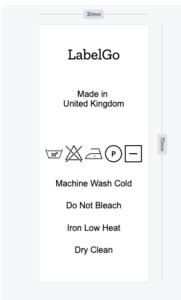
Digital Tools and Accuracy in Care Label Production
Errors in care labeling are costly. AI-supported and digital labeling tools now allow brands to:
-
Minimise human error
-
Standardise icons and text
-
Accelerate approval workflows
These advancements are explored further in
👉 The Benefits of Digital Label Design and Customization Tools
and
👉 AI-Supported Labeling for Faster and More Accurate Production
Accuracy is not just technical—it protects brand reputation.
Care Labels as Part of a Complete Label System
Care labels should never be treated in isolation. They function as part of an integrated labeling system that includes:
-
Brand labels
-
Size labels
-
Origin labels
-
Hang tags
Understanding this ecosystem is critical. For a foundational overview, see
👉 Care (Wash Instruction) Labels: A Must for Every Garment
And to explore how labels collectively support storytelling and engagement, review
👉 The Art of Storytelling Through Product Labels
Conclusion: Small Label, Major Impact
Care labels may be small, but their impact is substantial. They protect consumers, ensure compliance, reinforce sustainability, and reflect brand integrity.
For fashion brands serious about quality, compliance, and global scalability, well-engineered care labels are not optional—they are essential.
At LabelGo, care labels are designed with material science, regulatory awareness, and production efficiency in mind—ensuring consistency from concept to shipment.