
In today’s apparel market, fit accuracy is directly linked to customer satisfaction, return rates, and brand credibility. While fabric quality and garment construction are critical, size labels are the primary reference customers use to judge fit—both online and in-store. Clear, durable, and standardized size labels help customers find the perfect fit while supporting a professional brand presentation.
This article explains why size labels matter, how they should be designed, and how they fit into a complete labeling system for fashion brands.
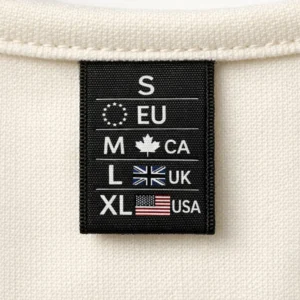
The Importance of Size Labels in Modern Apparel
Globalized fashion markets and e-commerce have made sizing more complex than ever. Customers regularly compare brands, countries, and size systems before purchasing. In this environment, poorly designed or inconsistent size labels lead to confusion and mistrust.
Well-structured size labels:
-
Help customers identify fit instantly
-
Reduce size-related returns
-
Improve purchase confidence
-
Support international sizing standards
-
Strengthen overall garment usability
For brands operating across regions, size labels are not optional—they are a functional requirement.
How Size Labels Improve Customer Experience
Size labels are one of the first physical touchpoints a customer interacts with after purchase. Labels that fade, shrink, or become unreadable after washing negatively impact the perceived quality of the garment.
High-performance size labels should:
-
Remain legible after repeated washes
-
Maintain dimensional stability
-
Be comfortable against the skin
-
Stay securely stitched without curling or fraying
Many apparel brands prefer woven solutions for this reason. For a technical overview, see What Are Woven Labels? A Complete Guide.
Common Types of Size Labels Used in Clothing
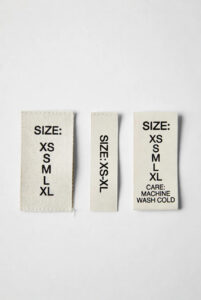
Choosing the right size label format depends on garment type, production method, and expected lifespan.
Most common size label formats:
-
Woven size labels – High durability, wash-resistant, ideal for long-term use
-
Printed size labels – Lightweight and cost-efficient for fast fashion
-
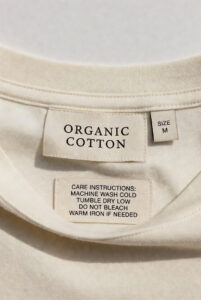
Combined size & care labels – Space-saving and production-efficient
A detailed comparison of durability, cost, and application methods can be found in Woven Labels vs. Printed Labels Which One to Choose?
Tips for Selecting the Best Label Size for Your Product
Physical label dimensions play a critical role in readability, comfort, and sewing efficiency. A label that is too small compromises clarity, while oversized labels affect wearability.
Key factors to consider:
-
Garment category (t-shirts, outerwear, babywear)
-
Placement area (neck, side seam, waistband)
-
Font size and contrast
-
Fold type (center fold, end fold, straight cut)
For standardization guidance, refer to A Guide to Standard Size Labels Across Global Markets.
Size Labels and Brand Consistency
Although size labels are primarily functional, they contribute to overall brand coherence. Consistent typography, color usage, and material selection across size labels, main labels, and care labels reinforce brand discipline.
When aligned correctly with:
-
Main woven or printed brand labels
-
Care (wash instruction) labels
-
Hang tags
…size labels become part of a structured and professional labeling system. This relationship is explored further in How Custom Labels Help Build a Recognizable Fashion Brand?
Reducing Returns Through Accurate Size Labeling
Size-related returns remain one of the highest cost drivers in apparel logistics. Clear and standardized size labels help set correct expectations before and after purchase.
Effective size labeling helps to:
-
Reduce customer uncertainty
-
Support online size charts
-
Minimize post-purchase dissatisfaction
-
Improve repeat purchase behavior
This directly impacts long-term customer trust, as discussed in How Custom Labels Enhance Customer Loyalty and Recognition.
Sustainability Considerations for Size Labels
Sustainability is increasingly relevant even for small garment components like size labels. Brands can optimize their labeling strategy by:
-
Using organic cotton or recycled yarns
-
Limiting unnecessary color variations
-
Standardizing size formats across collections
-
Combining size and care information when appropriate
For a broader sustainability perspective, see Why Sustainable Labeling Matters in Modern Fashion.
Conclusion
Size labels play a critical role in helping customers find the perfect fit while supporting operational efficiency and brand credibility. When engineered for clarity, durability, and consistency, they reduce returns, enhance customer experience, and integrate seamlessly into a professional garment labeling system.
For fashion brands aiming to scale sustainably and maintain quality standards, investing in properly designed size labels is a technical necessity—not a minor detail.