
Choosing the right label type is a foundational decision for any fashion brand. In practice, labels influence not only brand perception but also garment quality, regulatory compliance, and production efficiency. Therefore, selecting the correct label system helps ensure consistency across collections while supporting long-term scalability and operational control.
With this in mind, the following framework explains how to choose the most suitable label types for your fashion brand by considering functionality, positioning, and production realities.
1. Start With Brand Identity and Positioning
First and foremost, label choices should align with how your brand is positioned in the market. For example, premium and heritage brands often rely on refined, durable label solutions to communicate craftsmanship and confidence. By contrast, contemporary or minimalist brands may prefer lighter, more understated options.
As a result, label selection becomes an extension of brand strategy. This connection between labels and perception is explored in The Importance of Custom Labels in Building Brand Identity and directly shapes customer expectations.
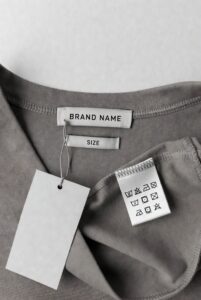
2. Understand the Core Label Types
Woven Labels
Woven labels are widely regarded as the standard solution for permanent brand identification. In particular, they offer excellent durability, long-term legibility, and a premium tactile feel. Because of this, they are commonly used for neck labels and signature branding.
Moreover, woven labels play a significant role in communicating quality, as explained in What Are Woven Labels?.
Printed Labels
Printed labels, on the other hand, are typically used for care instructions, size details, and regulatory content. Additionally, they allow high text clarity and flexible layouts, especially where space is limited or softness is required.
However, durability and wash resistance should always be evaluated to ensure long-term performance.
Cardboard Labels (Hang Tags)
Meanwhile, hang tags serve a different purpose altogether. Specifically, they support storytelling, pricing, and brand messaging at the point of sale. Although they are not permanently attached, they are often the first branded element customers interact with.
Their role in branding is further discussed in Cardboard Labels (Hang Tags) and Their Importance in Branding.
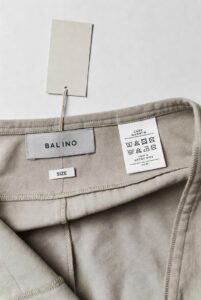
3. Match Label Type to Garment Placement
Equally important, label performance depends on where it is applied on the garment. For instance:
Neck area: prioritizes comfort and durability → woven or soft printed labels
Side seam: focuses on compliance and readability → printed care labels
External attachment: emphasizes visual impact → hang tags
By evaluating placement alongside label type, brands can prevent comfort issues while maintaining a consistent user experience.
4. Account for Legal and Regulatory Requirements
In addition, some labels are legally mandatory in most markets. Notably, care labels and country-of-origin labels must comply with regional regulations regarding content, language, and permanence.
If these requirements are overlooked, production delays or market restrictions may occur. For this reason, compliance should be considered early in the label selection process.
5. Integrate Sustainability Into Label Selection
At the same time, sustainability has become a key differentiator in modern fashion. Consequently, many brands now choose recycled yarns, organic cotton, or low-impact printing methods.
When done correctly, this approach balances environmental responsibility with performance, a topic addressed in Why Sustainable Labeling Matters in Modern Fashion.

6. Validate Size, Fold, and Production Feasibility
Finally, even the correct label type can fail if size or folding is poorly planned. Therefore, stitch margins, fold loss, and readability must be evaluated before production approval.
To avoid costly revisions, practical sizing considerations are outlined in Tips for Selecting the Best Label Size for Your Product.
Conclusion
In summary, choosing the right label type is not a single decision but a structured process. By combining brand identity, garment function, legal compliance, sustainability goals, and production constraints, labels become a strategic asset rather than a technical afterthought.
At LabelGo, label selection is treated as an engineered workflow. As a result, every label is visually aligned with the brand, technically reliable, and ready for scalable, global production.