
In modern apparel and product manufacturing, labels are not standalone elements. They function as a coordinated system that communicates brand identity, legal compliance, product information, and perceived quality.
Combining woven labels, printed labels, care labels, size labels, and hang tags strategically ensures clarity, durability, and operational efficiency.
This guide explains how to integrate different label types effectively — from technical alignment to brand consistency — while maintaining production feasibility.
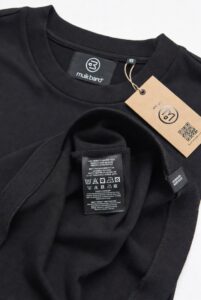
1. Understand the Role of Each Label Type
Before combining labels, define their primary function within your product ecosystem.
Woven Labels – Brand Core
Woven labels are typically used as the main brand identifier inside garments. They offer high durability and strong stitch integration.
For a technical overview, refer to:
Woven labels perform best when used for:
Logo display
Long-term brand reinforcement
Premium positioning
Garments with 30–60°C wash cycles
Printed Labels – Information Flexibility
Printed labels are optimal for detailed information, high-color artwork, or soft-touch applications.
Learn more in:
They are suitable for:
Care instructions with multiple symbols
Composition details
Complex graphics
Lightweight or skin-sensitive garments
Care Labels – Legal & Compliance
Care labels are mandatory in many markets. They include washing symbols, fabric composition, and origin details.
For regulatory and design guidance, see:
They must be:
Durable against repeated washing
Legible at small sizes
Positioned for easy access without irritating the wearer
Size Labels – Functional Precision
Size labels eliminate ambiguity in retail environments and improve customer experience.
Related reading:
They are typically:
Integrated into woven main labels
Produced as separate small woven tags
Or printed directly onto care labels
Hang Tags (Cardboard Labels) – First Impression Layer
Hang tags communicate brand story, pricing, barcode, sustainability claims, and campaign messaging.
For deeper insight:
Hang tags are not washed, so they allow:
Heavier materials (300–450 gsm)
Embossing or foil
Multi-language storytelling
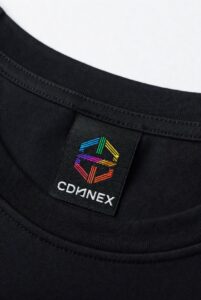
2. Build a Structured Label Hierarchy
Effective combination requires hierarchy.
Primary Layer (Brand Identity)
Woven main label
Optional size integration
Secondary Layer (Compliance & Information)
Care label
Fabric composition
Country of origin
Tertiary Layer (Marketing & Retail Communication)
Hang tag
QR codes
Sustainability statements
Avoid overcrowding one label with all information. This creates:
Reduced readability
Stitch tension issues
Excessive thickness in seam areas
Instead, distribute functions logically.
3. Maintain Visual & Material Consistency
When combining different label types, consistency is critical.
Align:
Color palette (Pantone reference)
Font family
Logo proportions
Edge finishing (ultrasonic vs. cut & fold)
For example:
A high-density woven logo label should not be paired with a low-resolution printed care label.
A matte recycled hang tag should not visually conflict with a high-gloss synthetic woven label.
Brand coherence across label types strengthens recognition and recall. See also:
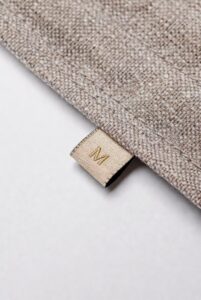
4. Optimize for Garment Integration
Labels must function within real production conditions.
Consider:
Seam Placement
Center fold woven labels increase sewing speed.
Side-seam care labels reduce neck irritation.
Fabric Interaction
Thick woven labels on lightweight fabrics may cause distortion.
Iron-on printed labels are not recommended for high-temperature wash garments.
Wash Performance
60°C wash garments require higher thread density or durable ink systems.
Babywear benefits from soft satin or ultrasonic-cut edges.
Combining label types effectively means designing for stitching ergonomics and wearer comfort — not just aesthetics.
5. Plan for Scalability & Reorders
An optimized label system should support:
Future size extensions
International market expansion
Seasonal color updates
Regulatory adjustments
Standardizing dimensions and placement across collections simplifies production and reduces long-term costs.
For brands scaling internationally, review:
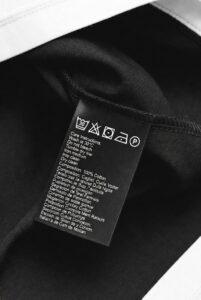
6. Avoid Common Integration Mistakes
Typical errors when combining label types:
Overloading the woven label with excessive text
Using too many colors (6–8) on small dimensions
Placing critical information across fold lines
Mismatching warp color (black/white base) with light backgrounds
Ignoring wash durability requirements
For design-stage prevention:
7. Example of an Optimized Label System (Fashion Brand)
Main Label:
High-density woven label (center fold, 60–70 picks)
Size Label:
Separate mini woven tag stitched into the seam
Care Label:
Printed satin, multi-language, 5 standard wash icons
Hang Tag:
400 gsm recycled cardboard, matte finish, single color foil logo
This configuration balances:
Durability
Clarity
Production efficiency
Cost control
Brand consistency
Final Considerations
Combining different label types effectively requires technical planning, not improvisation.
Each label must:
Serve a defined purpose
Integrate with the garment structure
Align with wash requirements
Maintain brand coherence
Remain scalable for repeat production
A well-engineered label system does more than provide information — it reinforces quality, compliance, and brand authority at every customer touchpoint.
For technical configuration support or production guidance, consult LabelGo’s engineering-led manufacturing team via labelgo.net.
Start your labeling journey with LabelGo!
Check out our products and customize your label with ease.
Ready to Stand Out? Discover Our Blog for Branding Inspiration
Take your brand a step forward with tips, guides, and inspiring content from the world of labeling. Learn about choosing the right labels, industry trends, and design strategies.
Need Help ?
Need help? If you encounter any issues, feel free to reach out to us. We’re happy to assist!