
Hang tags are more than informational attachments; they are a physical extension of a brand’s production quality, material choices, and communication standards. For apparel, accessories, and lifestyle products, the correct combination of material and printing method determines durability, legibility, sustainability performance, and perceived reliability at point of sale.
This guide outlines the most commonly used hang tag materials and printing options, with a production-focused perspective to help brands make technically sound decisions.

Common Materials Used for Hang Tags
1. Cardboard (Paper-Based Hang Tags)
Cardboard hang tags are the most widely used option across fashion and retail sectors due to their flexibility in thickness, finishing, and print compatibility.
Typical specifications
-
Weight range: 300–450 gsm
-
Finishes: matte, gloss, soft-touch, uncoated
-
Edge options: straight cut or rounded corners
Best used for
-
Apparel collections
-
Retail-ready products
-
Seasonal or campaign-based items
Cardboard tags allow precise color reproduction and are compatible with nearly all printing technologies. Their importance in brand communication is discussed further in Cardboard Labels (Hang Tags) and Their Importance in Branding.
2. Recycled and Sustainable Paper Materials
Sustainable hang tags are increasingly specified by brands aiming to reduce environmental impact while maintaining production efficiency.
Material options
-
Recycled cardboard
-
FSC-certified paper
-
Uncoated natural-fiber papers
Technical considerations
-
Slight color absorption variance compared to coated paper
-
Best paired with digital or offset printing
-
Suitable for mono or low-color designs
Brands focused on environmental responsibility often align these choices with broader labeling strategies, as explored in The Environmental Benefits of Using Sustainable Label Materials.
3. Specialty and Textured Papers
Specialty papers add tactile differentiation but require careful printing and finishing control.
Examples
-
Kraft paper
-
Linen-textured paper
-
Cotton-based paper
Production notes
-
Not ideal for fine text or dense graphics
-
Ink absorption must be compensated during pre-production
-
Recommended for simple layouts and minimal color palettes

Printing Options for Hang Tags
Digital Printing
Digital printing is the most efficient option for short to medium production runs.
Advantages
-
Fast setup and turnaround
-
High-resolution output
-
Cost-effective for lower quantities
Limitations
-
Slightly higher unit cost at large volumes
-
Limited specialty ink compatibility
Digital printing is ideal for brands running frequent design updates or multiple SKUs.
Offset Printing
Offset printing is used for high-volume hang tag production where color consistency is critical.
Advantages
-
Precise color control
-
Lower cost per unit at scale
-
Excellent for coated and uncoated papers
Limitations
-
Higher setup cost
-
Longer preparation time
For brands managing multiple collections, offset printing ensures consistency across tags, labels, and packaging systems. Strategic alignment between tag and label design is discussed in Woven Labels, Cardboard Labels & Printed Labels: Find the Perfect Match for Your Brand.
Screen Printing
Screen printing is used selectively, typically for bold graphics or limited color designs.
Key characteristics
-
High ink opacity
-
Strong contrast on dark materials
-
Suitable for simple layouts
Not recommended for fine text or multi-color gradients.
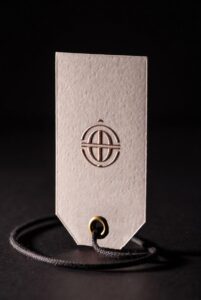
Finishing Options and Functional Add-ons
Printing is only part of hang tag production. Finishing options directly affect durability and handling.
Common finishes
-
Lamination (matte or gloss)
-
Spot UV (for logo emphasis)
-
Embossing or debossing
-
Foil stamping (used selectively)
Functional features
-
Reinforced holes
-
Pre-attached strings or pins
-
Rounded corners for reduced edge wear
Each finishing decision should consider logistics, garment attachment method, and retail handling.
Choosing the Right Combination for Your Brand
Selecting the optimal hang tag configuration depends on several production variables:
-
Product category
-
Expected handling frequency
-
Wash and wear lifecycle
-
Sustainability requirements
-
Budget and reorder scalability
Brands should also consider consistency between hang tags and sewn-in labels. This system-based approach strengthens recognition and is closely linked to How Custom Labels Enhance Customer Loyalty and Recognition.
Long-Term Production Considerations
From a manufacturing perspective, hang tags should be designed for repeatability. Standardized materials and print methods reduce setup time, minimize variation between batches, and support faster reorders.
Key recommendations:
-
Lock material and gsm early
-
Avoid unnecessary color complexity
-
Maintain consistent hole placement and size
-
Archive approved artwork for future production
Conclusion
Hang tags play a critical role in conveying product information, reinforcing brand standards, and supporting retail operations. By carefully selecting appropriate materials and printing options, brands can ensure clarity, durability, and production efficiency without unnecessary cost escalation.
For brands scaling collections or managing international distribution, technically optimized hang tags are not optional—they are a structural component of professional labeling systems.