Selecting the right label type is a strategic decision that shapes brand perception, durability, and the overall customer experience. Printed labels and woven labels each serve different functional and aesthetic purposes, and choosing between them depends on the artwork, the product category, and the level of brand consistency required. Below is a structured comparison aligned with LabelGo’s production standards.
1. Production Method: Printed Precision vs. Woven Integration
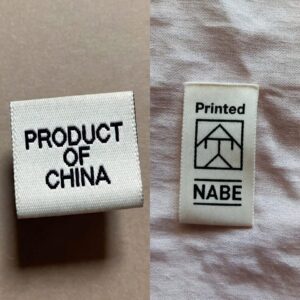
Woven labels are created by weaving colored yarns together to form the artwork. Because every detail is built from thread, the label becomes an integrated textile component. This results in exceptional durability, long-term color stability, and a premium tactile feel—ideal for fashion brands prioritizing longevity.
Printed labels, on the other hand, rely on direct ink application onto satin, cotton, or polyester substrates. This method excels at reproducing fine details, small text, gradients, and complex color transitions. For artwork that cannot be replicated through weaving (such as multicolor illustrations), printed solutions provide unmatched visual accuracy.
To better understand woven construction, see:
[What Are Woven Labels?]
[What Are Woven Labels? A Complete Guide]
2. Visual Output and Detail Fidelity
Woven labels offer a textured, high-end appearance but have natural limitations when rendering micro-details. Fine lines may thicken slightly, and gradients must be translated into limited yarn color blocks.
Printed labels enable near-photographic clarity. Even the smallest iconography, variable text, or QR codes can be reproduced sharply. This makes them ideal for care labels, size labels, or intricate branding.
For further reading on design accuracy, visit:
[The Benefits of Digital Label Design and Customization Tools]
[5 Common Mistakes to Avoid When Designing Your Product Label]
3. Durability and Performance
Woven labels outperform printed labels in long-term abrasion resistance. They withstand frequent washing, friction, and intensive use without fading—an essential requirement for premium apparel, sportswear, kidswear, and denim.
Printed labels are durable but can gradually fade depending on ink type, fabric composition, and wash cycles. High-quality satin or cotton prints, however, remain optimal for comfort-focused products where the label touches the skin.
Explore woven performance insights:
[How Do Woven Labels Reflect the Quality of Your Brand?]
[Benefits of Using Woven Labels for Clothing Brands]
4. Comfort, Texture, and User Experience
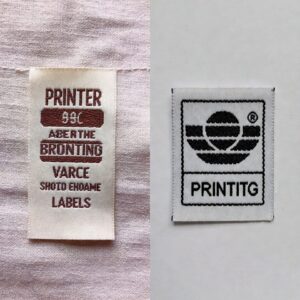
Woven labels provide a structured, slightly more rigid feel—perfect for visible branding areas like outerwear neck labels or hem labels.
Printed labels deliver maximum softness, especially satin-based prints, offering a friction-free wearing experience. This is why many brands choose printed labels for care labels and size labels positioned inside garments.
Related reading:
[What Are Care Labels and Why Are They Legally Required?]
5. Cost Structure and MOQs
Woven labels typically involve a higher setup cost due to weaving machine configuration and colorway preparation. They offer the best value in medium-to-large production runs and for brands seeking a signature premium finish.
Printed labels are cost-efficient, especially at lower quantities or when multiple variants (sizes, languages, collections) are needed. They also allow faster production cycles.
If you’re comparing multiple label types, see:
[Woven Labels, Cardboard Labels & Printed Labels: Find the Perfect Match for Your Brand]
6. Sustainability Considerations
Both label types can be produced using OEKO-TEX® certified materials and eco-friendly fibers.
Woven labels tend to last longer—reducing replacement needs—while printed labels can be produced on recycled polyester or FSC-certified cotton ribbons.
Discover more:
[The Environmental Benefits of Using Sustainable Label Materials]
[Why Sustainable Labeling Matters in Modern Fashion]
7. Choosing the Right Label for Your Brand
Choose woven labels if your priority is:
• premium texture
• long-term durability
• minimalistic artwork
• strong brand presence
Choose printed labels if your priority is:
• detailed graphics and gradients
• comfort-first user experience
• multi-language care instructions
• flexibility in small batches
For guidance on selection and strategy, explore:
[How to Choose the Right Label Type for Your Fashion Brand?]
[Tips for Selecting the Best Label Size for Your Product]
[The Art of Storytelling Through Product Labels]
8. Final Recommendation
Both printed and woven labels are essential tools in modern fashion labeling. The optimal choice depends on artwork complexity, desired brand positioning, and the physical demands of the product. With LabelGo’s advanced configurator—powered by real-time previews and color detection—brands can evaluate both options with engineering-level accuracy before placing an order.