Wash instruction labels rely on standardized care symbols to communicate how a garment should be cleaned, dried, and maintained. These symbols are designed to be universally understood, regardless of language, making them essential for global apparel brands and international markets.
This article explains the most common wash instruction symbols, what they mean, and why using them correctly is critical for compliance, durability, and customer satisfaction.
Why Wash Instruction Symbols Matter
Care symbols are not decorative elements. They serve three core functions:
Consumer guidance: Help users care for garments correctly
Product protection: Reduce damage caused by improper washing or drying
Legal compliance: Meet labeling regulations in many regions
In most markets, care information must be clear, accurate, and durable. The regulatory context is explained in more detail in What Are Care Labels and Why Are They Legally Required?.
The Five Main Categories of Care Symbols
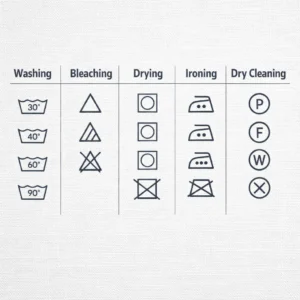
Wash instruction symbols are generally grouped into five standardized categories, commonly aligned with ISO and GINETEX systems.
1. Washing Symbols
Represented by a wash tub icon, these symbols indicate:
Whether machine washing is allowed
Maximum water temperature
Gentle or special wash cycles
Additional lines under the tub usually signal reduced mechanical action.
2. Bleaching Symbols
Shown as a triangle, bleaching symbols clarify:
Whether bleaching is permitted
If only non-chlorine bleach can be used
When bleaching is completely prohibited
Incorrect bleaching instructions are a frequent cause of fabric damage.
3. Drying Symbols
Drying symbols typically appear as a square and specify:
Tumble drying allowance
Heat level (low, medium, high)
Natural drying methods such as line drying or flat drying
Clear drying instructions significantly extend garment lifespan.
4. Ironing Symbols
Displayed as an iron icon, these symbols indicate:
Whether ironing is allowed
Maximum ironing temperature
When steam should be avoided
Incorrect ironing is a common source of irreversible textile damage.
5. Dry Cleaning Symbols
Represented by a circle, these symbols inform:
Whether professional dry cleaning is allowed
Which solvents may be used
Special process limitations for cleaners
These symbols are particularly important for tailored or delicate garments.
Consistency and Accuracy in Symbol Usage
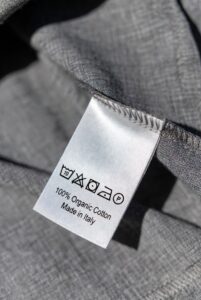
Using standard symbols consistently across collections is essential. Mixing non-standard icons, incorrect temperatures, or misleading combinations can result in:
Customer complaints
Increased returns
Legal exposure in regulated markets
Many of these issues stem from early design decisions. A broader overview of labeling errors can be found in 5 Common Mistakes to Avoid When Designing Your Product Label.
Symbol Placement and Label Design Considerations
Care symbols must remain legible throughout the garment’s life. This depends on:
Label material selection (satin vs. taffeta)
Print or weave durability
Proper size and spacing
Overcrowded labels reduce readability, especially when multiple symbols are required. Guidance on sizing is covered in Tips for Selecting the Best Label Size for Your Product.

Wash Symbols as Part of a Complete Labeling System
Wash instruction symbols should not be treated in isolation. They function best when integrated with:
Fiber composition details
Size information
Country-of-origin statements
Together, these elements form a compliant and professional labeling system, as outlined in Care (Wash Instruction) Labels: A Must for Every Garment.
Final Thoughts
Standard wash instruction symbols are a universal language in apparel care. When used correctly, they protect garments, guide consumers, and ensure compliance across global markets.
For brands, investing in accurate symbol usage and durable label production is not optional—it is a core part of product quality, risk management, and customer trust.