In the fashion and textile industry, woven labels are not a decorative afterthought—they are a core branding component that communicates quality, authenticity, and professionalism. A well-engineered woven label enhances brand recognition, reinforces trust, and elevates the perceived value of your garments.
This step-by-step guide explains how to design a production-ready woven label using a structured, engineering-driven approach—ensuring your label performs flawlessly from design to final stitch.
Step 1: Understand the Strategic Role of Woven Labels
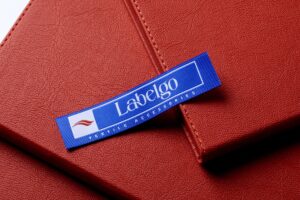
Before starting the design process, it is essential to understand why woven labels matter. Woven labels are long-term brand assets. They remain with the garment throughout its lifecycle, enduring repeated washing, friction, and wear.
If you are new to the category, we recommend reviewing
What Are Woven Labels? and What Are Woven Labels? A Complete Guide
to understand their construction, yarn-based color integration, and durability advantages.
For brands aiming to communicate craftsmanship and premium positioning, woven labels consistently outperform alternatives. This is explored in detail in
How Do Woven Labels Reflect the Quality of Your Brand? and
Everything About Woven Labels in Fashion Industry.
Step 2: Choose the Right Label Type for Your Brand
Not every brand requires the same labeling solution. Selecting the correct label type depends on your product category, target audience, and usage environment.
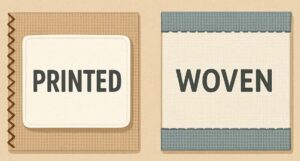
While this guide focuses on woven labels, it is important to compare them objectively against other options. For a broader perspective, review
Woven Labels vs. Printed Labels Which One to Choose? and
Printed Labels vs. Woven Labels: Key Differences.
You may also find value in
Woven Labels, Cardboard Labels & Printed Labels: Find the Perfect Match for Your Brand
to ensure your choice aligns with both branding and production realities.
Step 3: Define Size, Placement, and Fold Type
Technical precision is critical at this stage. Label dimensions and fold type directly impact readability, comfort, and sewing efficiency.
When defining size:
Ensure sufficient margins for stitching
Avoid overcrowding text or fine details
Consider garment category (neck label, hem label, side seam)
For best practices, see
Tips for Selecting the Best Label Size for Your Product and
A Guide to Standard Size Labels Across Global Markets.
Fold selection is equally important. Center folds are ideal for neck branding, while end folds or straight cuts suit hem or side seam applications. The wrong fold choice can compromise comfort and durability.
Step 4: Optimize Artwork for Woven Production
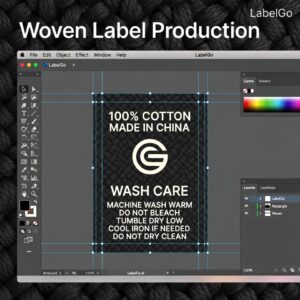
Unlike printed labels, woven labels translate artwork into yarn structures. This requires thoughtful design adaptation.
Key technical considerations:
Limit color count (typically 2–8 colors)
Avoid ultra-thin lines and small text
Use high-contrast color combinations
Maintain safe margins from edges
For design inspiration and technical guidance, review
Design Tips for Eye-Catching Woven Labels and
5 Common Mistakes to Avoid When Designing Your Product Label.
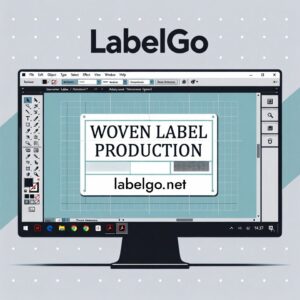
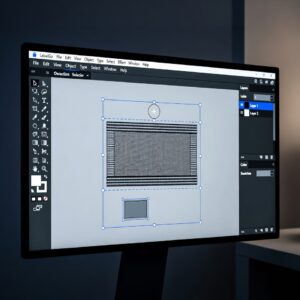
Advanced brands increasingly rely on digital tools to preview and validate designs before production. This process is covered in
The Benefits of Digital Label Design and Customization Tools and
AI-Supported Labeling for Faster and More Accurate Production.
Step 5: Select Materials and Sustainability Options
Material selection influences not only aesthetics, but also sustainability credentials and consumer perception. Eco-conscious brands should consider yarn choices, density, and production efficiency.
Sustainability-focused insights can be found in
Why Sustainable Labeling Matters in Modern Fashion and
The Environmental Benefits of Using Sustainable Label Materials.
A sustainable woven label strengthens brand storytelling and aligns with modern consumer expectations—especially in premium and ethical fashion segments.
Step 6: Ensure Compliance and Brand Consistency
Your woven label rarely exists alone. It must integrate seamlessly with care labels, size labels, and origin labels.
To ensure compliance and consistency, review:
A unified labeling system enhances trust and reinforces brand credibility across global markets.
Step 7: Validate the Design Through Storytelling and Branding
Beyond technical execution, your woven label should tell a story. It should reflect your brand’s heritage, values, and positioning—often within just a few centimeters of fabric.
Explore branding-focused perspectives in
The Art of Storytelling Through Product Labels and
How Custom Labels Enhance Customer Loyalty and Recognition.
Strong labels are not only identifiers; they are emotional touchpoints that stay with the customer long after purchase.
Final Thoughts: From Design to Production Excellence
Designing the perfect woven label requires a balance of creativity, engineering precision, and production expertise. When executed correctly, woven labels become powerful brand signatures—durable, refined, and instantly recognizable.
By following a structured, step-by-step approach and leveraging advanced digital configurators, brands can achieve design-to-production accuracy, reduced errors, and consistent quality at scale.
For fashion brands seeking long-term brand equity, woven labels are not optional—they are essential.