In today’s fast-paced apparel and product markets, speed, accuracy, and brand consistency are no longer optional—they are operational requirements. Digital label design and customization tools address these needs by transforming how brands develop, preview, and produce labels. At LabelGo, these tools are engineered to bridge the gap between creative intent and production reality, ensuring that every label is both visually precise and manufacturing-ready.
1. Faster Design-to-Production Cycles
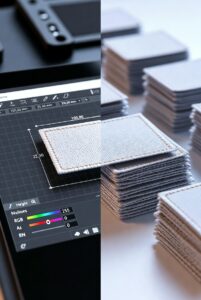
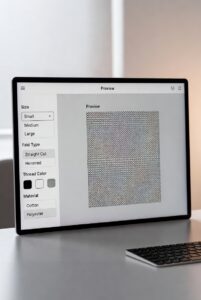
Traditional label development often involves multiple revisions, emails, and manual approvals. Digital configurators eliminate this friction by enabling real-time customization with instant visual feedback. Designers can adjust size, fold type, colors, and materials while seeing an accurate preview of the final output. This significantly reduces lead times and accelerates the transition from concept to production.
For brands looking to streamline workflows, this efficiency directly supports faster product launches and reduced operational overhead.
2. Improved Accuracy and Production Feasibility
Digital tools are built around production constraints such as loom density, color limits, stitch margins, and material behavior. This ensures that designs are not only attractive on screen but also technically feasible at scale. Automated color filtering and size validation reduce human error, while pre-production checks help prevent costly remakes.
This production-first approach aligns closely with the principles discussed in Step-by-Step Guide to Designing Your Perfect Woven Label, where design precision directly impacts manufacturing quality.
3. Consistent Brand Identity Across Collections
Maintaining consistency across multiple product lines and seasons can be challenging. Digital customization tools store design parameters and color profiles, allowing brands to replicate label specifications with high fidelity. This consistency reinforces brand recognition and supports long-term identity building—an essential factor highlighted in The Importance of Custom Labels in Building Brand Identity.
4. Data-Driven Customization and Scalability
Digital platforms enable scalable customization. Whether producing 100 or 100,000 labels, brands can maintain the same design logic while adjusting quantities, sizes, or applications. This flexibility is particularly valuable for fashion brands managing diverse SKUs or limited collections, as explored in Choosing the Right Label Type for Your Clothing Brand.
5. Sustainability and Waste Reduction
By validating designs digitally before production, material waste is significantly reduced. Fewer sampling rounds mean lower resource consumption and a smaller environmental footprint. When combined with sustainable substrates, digital design tools actively support responsible manufacturing—an increasingly important consideration discussed in Why Sustainable Labeling Matters in Modern Fashion.

6. Enhanced Collaboration and Transparency
Digital tools create a shared reference point between designers, product managers, and production teams. Approval workflows are clearer, revisions are tracked, and expectations are aligned early in the process. This transparency minimizes miscommunication and ensures that the final label matches the approved specification exactly.
Conclusion
Digital label design and customization tools are no longer a convenience—they are a strategic asset. By improving speed, accuracy, scalability, and sustainability, they enable brands to operate more efficiently while delivering consistent, high-quality labels. For modern brands aiming to stay competitive, adopting digital label design is a logical step toward smarter, more controlled production.