
Care labels are often treated as a regulatory requirement, yet their real value lies in how they shape customer experience long after purchase. A properly engineered care label supports product usability, reinforces trust, and protects brand perception throughout the garment’s lifecycle.
In apparel manufacturing, customer experience does not end at checkout. It continues through washing, wearing, and long-term durability. Care labels operate at this exact intersection.
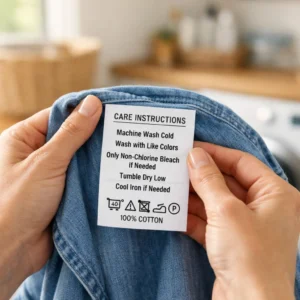
Care Labels as a Functional Customer Touchpoint
Care labels guide customers on how to maintain a garment correctly. Clear washing, drying, and ironing instructions reduce the risk of damage caused by incorrect handling.
From a customer experience standpoint, effective care labels deliver:
-
Reduced post-purchase confusion
-
Lower complaint and return rates
-
Extended garment lifespan
When instructions fade, shrink, or become unreadable, customers associate the issue with product quality—not label construction.
This is why understanding Why Are Care Labels Important in Apparel? is essential for brands aiming to improve long-term customer satisfaction.
Instruction Clarity Builds Consumer Trust
Consumers expect transparency regarding fabric composition, care requirements, and origin information. Care labels that present this data in a clean, readable format communicate reliability and professionalism.
Compliance-driven information, when poorly presented, feels like an obligation. When engineered correctly, it becomes a trust signal. This is particularly important for fashion brands operating across multiple markets with different consumer expectations.
Clear communication at this level supports the broader customer journey and complements brand identity elements discussed in How Custom Labels Enhance Customer Loyalty and Recognition.
Durability and Perceived Product Quality
Care labels are exposed to the most aggressive conditions a garment faces:
-
Repeated wash cycles at varying temperatures
-
Detergents and mechanical stress
-
Continuous skin and fabric friction
If a care label deteriorates faster than the garment itself, customers question the overall production quality.
Material choice, print method, and cutting technique directly affect durability. Satin, taffeta, and ultrasonic cutting each serve different use cases. Brands focused on longevity should align their specifications with best practices outlined in How to Design Durable and Easy-to-Read Care Labels.
Consistency Across the Brand Experience
Although care labels are not primary branding tools, they contribute to consistency across all product components. Typography, spacing, and information hierarchy should align with woven labels, size labels, and hang tags.
A poorly structured care label disrupts the user experience, even if the main branding is strong. Consistency reinforces professionalism and supports brand recognition over time.
This alignment is a key factor in How Custom Labels Enhance Customer Loyalty and Recognition across repeat purchases.

Sustainability Signals Through Care Labels
Today’s consumers increasingly evaluate brands based on environmental responsibility. Care labels produced with appropriate materials and efficient processes contribute to this perception.
Labels that remain intact throughout the garment’s life reduce waste and replacement needs. This supports sustainability narratives without relying on marketing claims.
When aligned with responsible sourcing, care labels become a quiet but credible signal of brand accountability.
Conclusion: A Small Component With Long-Term Impact
Care labels may be small in size, but their influence on customer experience is significant. Clear instructions prevent misuse, durable construction protects perceived quality, and thoughtful design reinforces trust.
From an engineering and production perspective, care labels deserve the same level of attention as woven or printed brand labels. Brands that invest in this detail reduce risk, improve customer satisfaction, and protect long-term brand value.
For regulatory alignment and consumer transparency, brands should also review What Are Care Labels and Why Are They Legally Required? to ensure compliance supports—not undermines—the customer experience.
LabelGo Technical Insight
Customer experience is functional, not decorative. Care labels sit where usability, durability, and responsibility intersect—and customers notice when they are done right.