
As fashion and apparel brands move into 2024, label design is no longer a secondary consideration—it is a strategic branding tool. Labels now play a critical role in communicating brand identity, sustainability values, product quality, and regulatory compliance. With advancements in materials, digital design tools, and production technologies, label design trends are evolving rapidly.
This article explores the top label design trends for 2024 and explains how brands can leverage them to strengthen market positioning, enhance customer trust, and achieve production efficiency.
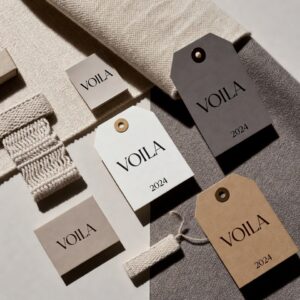
1. Brand-Centric and Story-Driven Label Design
In 2024, labels are expected to do more than display a logo—they must tell a story. Consumers increasingly seek authenticity and emotional connection, and labels are becoming compact storytelling platforms.
Strategic typography, minimal messaging, and intentional layout are used to communicate brand heritage and values. This shift reinforces the ideas discussed in
The Art of Storytelling Through Product Labels and
The Importance of Custom Labels in Building Brand Identity.
Brands that align label design with their core narrative benefit from stronger recognition and long-term loyalty, as explored in
How Custom Labels Enhance Customer Loyalty and Recognition.
2. Premium Woven Labels for Quality Positioning
Woven labels continue to dominate premium and mid-to-high-end fashion segments. Their durability, texture, and refined appearance make them a preferred choice for brands focused on craftsmanship and perceived value.
In 2024, trends include:
-
Higher weave densities for sharper detail
-
Tonal and monochrome color palettes
-
Minimalist designs with strong contrast
For brands evaluating this option,
What Are Woven Labels? and
What Are Woven Labels? A Complete Guide
provide essential technical background.
The strategic impact of woven labels on brand perception is further explained in
How Do Woven Labels Reflect the Quality of Your Brand?.
3. Sustainability-First Label Design
Sustainability is no longer a differentiator—it is an expectation. In 2024, eco-conscious label design focuses on material choice, production efficiency, and transparency.
Key sustainability-driven trends include:
-
Recycled and organic yarns
-
Reduced ink usage
-
Long-lasting labels that extend garment lifecycle
These developments align with insights from
Why Sustainable Labeling Matters in Modern Fashion and
The Environmental Benefits of Using Sustainable Label Materials.
Sustainable labeling also strengthens compliance and consumer trust, particularly in international markets.
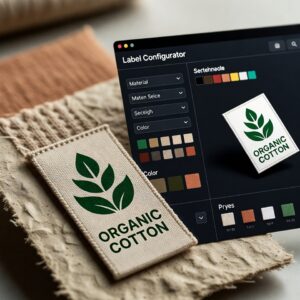
4. Digital-First Design and AI-Supported Production
Label design in 2024 is increasingly driven by digital configurators and AI-assisted workflows. Brands now expect real-time previews, automated color separation, and error reduction before production begins.
Digital tools allow:
-
Faster design iterations
-
Accurate size and color validation
-
Reduced sampling waste
This evolution is covered in
The Benefits of Digital Label Design and Customization Tools and
AI-Supported Labeling for Faster and More Accurate Production.
For brands developing woven labels, a structured workflow such as
Step-by-Step Guide to Designing Your Perfect Woven Label
is becoming a standard best practice.
5. Correct Label Type Selection by Product Category
Another key trend in 2024 is intentional label type selection. Brands are moving away from one-size-fits-all solutions and choosing label types based on garment function, price point, and usage environment.
Common applications include:
-
Woven labels for neck branding
-
Printed labels for care and compliance
-
Cardboard hang tags for retail storytelling
For a strategic overview, refer to
Woven Labels, Cardboard Labels & Printed Labels: Find the Perfect Match for Your Brand and
Choosing the Right Label Type for Your Clothing Brand.
Comparative insights are also available in
Woven Labels vs. Printed Labels Which One to Choose?.
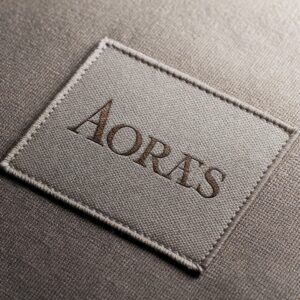
6. Size Accuracy, Compliance, and Global Readability
As brands expand globally, label readability and compliance are critical. In 2024, there is increased focus on:
-
Standardized label sizing
-
Clear typography
-
International regulation compatibility
Best practices are outlined in
Tips for Selecting the Best Label Size for Your Product and
A Guide to Standard Size Labels Across Global Markets.
Care labels remain a legal requirement and a major trust signal. For compliance guidance, review
Care (Wash Instruction) Labels: A Must for Every Garment and
Why Are Care Labels Important in Apparel?.
7. Minimalism with Functional Precision
Clean layouts, limited color palettes, and precise spacing dominate label aesthetics in 2024. Minimalism is not about simplicity alone—it is about engineering clarity.
However, avoiding technical mistakes is essential. Many brands still compromise legibility or stitch margins. These risks are addressed in
5 Common Mistakes to Avoid When Designing Your Product Label.
When executed correctly, minimalist labels enhance both visual appeal and production reliability.
Final Thoughts: Label Design as a Strategic Asset in 2024
Label design in 2024 sits at the intersection of branding, sustainability, and production technology. Brands that approach labels as engineered brand assets—not decorative afterthoughts—gain a measurable competitive advantage.
By combining premium materials, digital design tools, sustainable practices, and precise manufacturing, labels become powerful brand signatures that endure throughout the product lifecycle.
For fashion brands seeking scalability, consistency, and global credibility, following these label design trends is not optional—it is essential.