
Size labels are small but critical components of any garment. They indicate the size of a product (such as XS, S, M, L, XL or numeric equivalents) and help customers quickly identify whether an item is suitable for them. While often overlooked, size labels play a direct role in customer satisfaction, operational efficiency, and brand professionalism.
In modern apparel production, size labels are not optional accessories—they are a functional requirement that supports both the consumer and the brand.

What Are Size Labels?
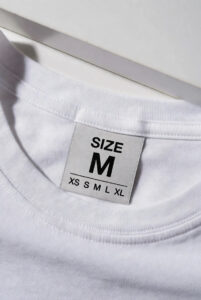
Size labels are textile or printed labels attached to garments to communicate sizing information. They are typically placed at the neck, inside side seams, or near care labels, depending on garment type and brand standards.
They can be produced as:
-
Woven size labels for long-term durability
-
Printed size labels for lightweight or minimalist designs
-
Combination labels, integrated with care or brand information
The key requirement is clarity: size information must remain legible throughout the product’s lifecycle, including repeated washing and wearing.
Why Size Labels Are Essential for Apparel Brands
1. Helping Customers Find the Right Fit
Clear size labeling reduces confusion and improves the shopping experience, both in-store and online. When customers can quickly identify the correct size, purchase hesitation and return rates decrease significantly.
This becomes especially important in international markets, where sizing standards vary. Consistent and well-designed size labels help bridge that gap. For a broader overview, see A Guide to Standard Size Labels Across Global Markets.
2. Reducing Returns and Operational Costs
Incorrect sizing is one of the most common reasons for apparel returns. Accurate, easy-to-read size labels help customers make informed decisions, directly reducing logistics costs and restocking issues for brands.
3. Supporting Professional Brand Presentation
A missing or poorly made size label can make even a well-designed garment feel incomplete. Size labels contribute to the overall perception of quality and attention to detail, especially when aligned with brand and care labeling systems.
This connection between labeling and brand perception is also discussed in How Custom Labels Enhance Customer Loyalty and Recognition.
Size Labels and Compliance Considerations
In many markets, size labels are closely linked with care and content labels. While size labeling itself may not always be legally mandated, incorrect or misleading size information can result in customer complaints and regulatory scrutiny.
For this reason, size labels are often produced alongside legally required care labels. You can explore this relationship further in What Are Care Labels and Why Are They Legally Required?.
Best Practices for Effective Size Labels
To ensure size labels perform their function effectively, brands should consider:
-
High contrast between text and background
-
Durable materials that withstand washing and friction
-
Consistent sizing logic across collections
-
Appropriate placement for comfort and visibility
Choosing the right dimensions is also important. Oversized labels can irritate the wearer, while labels that are too small may become unreadable. Detailed guidance can be found in Tips for Selecting the Best Label Size for Your Product.
Size Labels as Part of a Scalable Labeling System
For growing brands, size labels should be designed as part of a broader, standardized labeling system that includes brand labels, care labels, and origin labels. This ensures consistency across product lines and simplifies repeat production.
When properly planned, size labels contribute not only to usability but also to long-term brand efficiency and recognition.
Conclusion
Size labels may be small, but their impact is substantial. They help customers find the right fit, reduce returns, support compliance, and reinforce a brand’s professional image. For apparel brands aiming to scale and compete in global markets, well-designed and durable size labels are not just helpful—they are essential.